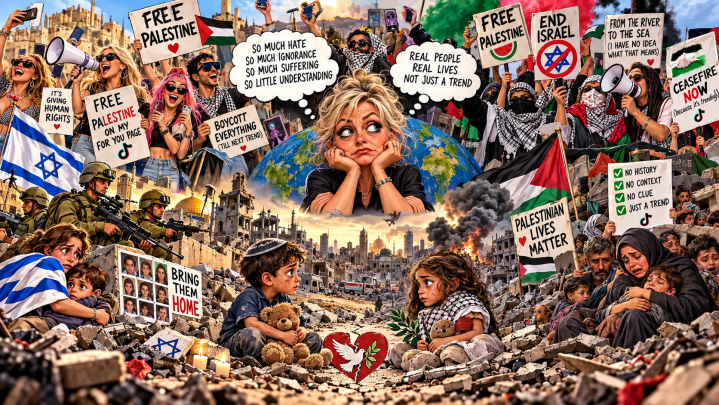
There’s a troubling trend gaining momentum across the globe, one that, though not new, is growing more intense in its reach and rhetoric. It’s the normalization of prejudice against Jews and Israelis, often veiled as political discourse, cultural commentary, or even activism. What was once confined to the shadows now boldly emerges in public spaces, online platforms, and even institutions that claim to champion justice.
What’s particularly alarming is the way this animosity is frequently disguised as criticism of Israel, its policies, government, and military. Criticism is, of course, an essential part of democracy. However, lines are crossed, sometimes subtly and other times blatantly. This hostility goes beyond politics, targeting Jewish people and holding them collectively responsible, subjecting them to blame, exclusion, harassment, and even violence based solely on their identity or heritage.
It’s important to note that criticizing Israeli policies does not automatically equate to antisemitism. Yet, what’s increasingly unfolding isn’t constructive critique, it’s the denial of legitimacy. When Israel is singled out for standards no other country faces, when its very existence is questioned, or when Jewish students are vilified for their identity, it ceases to be about politics. It becomes prejudice.
Anti-Zionism often provides a mask for antisemitism, but its effects are equally damaging: Jewish individuals worldwide find themselves unsafe, unwelcome,
In cities from Paris to Sydney, London to New York, Jewish communities are confronting a resurgence of hatred many thought had been left in the past. Synagogues face vandalism. Security measures in Jewish schools are commonplace. Holocaust survivors witness the painful resurgence of slogans and symbols repackaged for modern bigotry.
Social media, initially a tool for connection, has become a breeding ground for hostility. Extremist voices are amplified by algorithms, and Jewish users often find themselves bombarded with threats and conspiracies. While “free speech” is the justification, the reality is Israeli citizens living, studying, or working abroad face an additional layer of exclusion. Frequently reduced to symbols of their nation’s policies, they’re burdened with defending or apologizing for the complexities of a diverse country.
In cultural and academic spaces, Israeli creatives and scholars are rejected not because of their individual merits but solely due to their nationality. Boycotts, divestments, and sanctions target institutions but leave a deeply personal impact, conveying the chilling message: “You are not welcome.”
Perhaps the most painful aspect of this trend is the inconsistency of international outrage. Grave abuses by other regimes, often far harsher and less accountable, rarely elicit the same fervent attention. Millions suffer unnoticed while the global spotlight fixates on Israel. This selective indignation speaks volumes.
The message received by Jews and Israelis is stark: your pain is invalid. Your history is insufficient. Your right to safety and dignity is conditional.
This isn’t a plea to suppress criticism. It’s a call for collective integrity, to acknowledge that prejudice, no matter how cleverly veiled, erodes the moral fabric of society. It’s a demand for courage to confront bias and a restoration of basic principles: that every individual, regardless of their identity, deserves freedom from fear.
Change requires more than hashtags or symbolic gestures. It demands challenging conversations about bias, history, justice, and above all, empathy.
Because when any group is singled out, it’s a wound to the shared humanity of us all.

